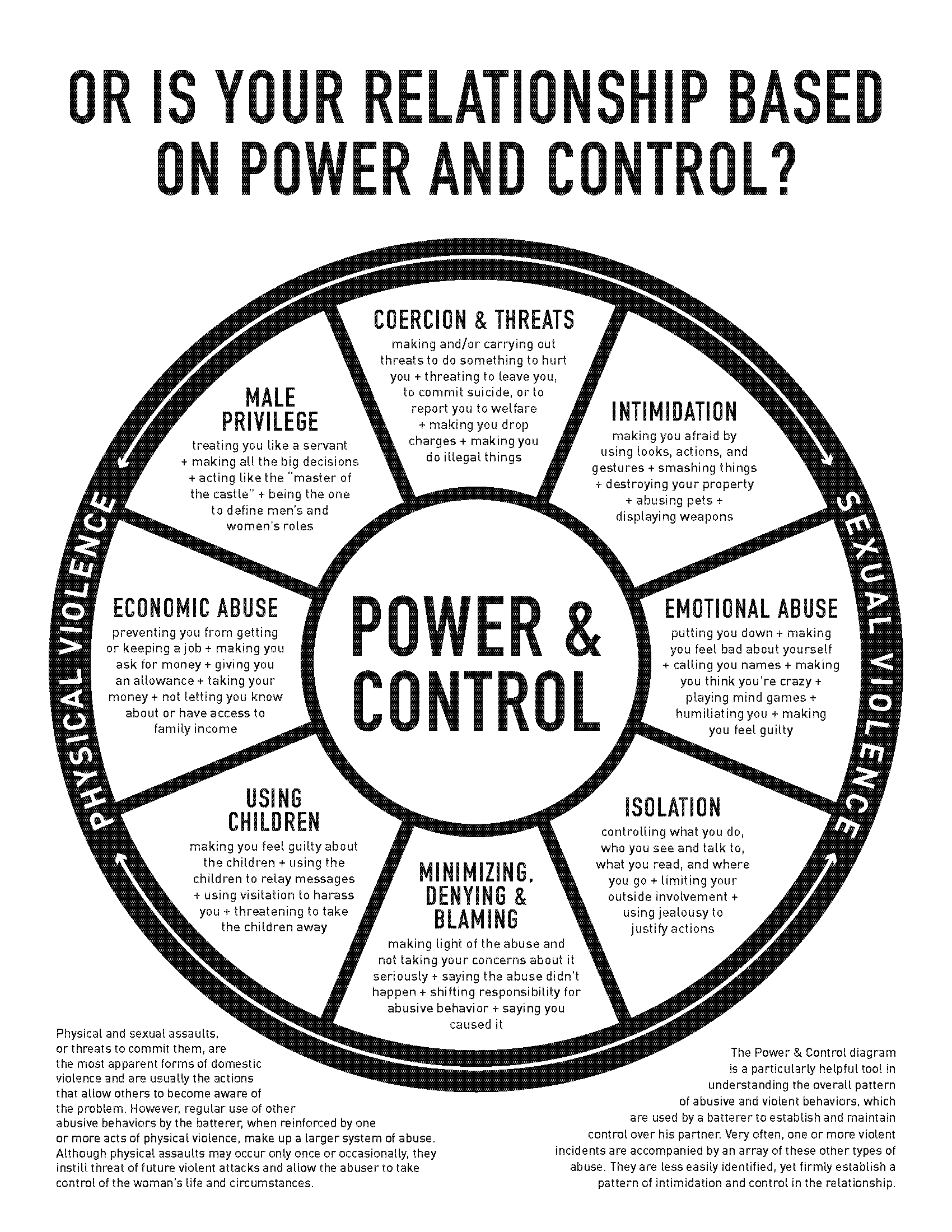
Power and Control
Domestic abuse occurs when one partner feels the need to dominate the other and uses abusive tactics to exert, and then maintain, power and control over their victim. As such, abuse is chronic and progressive. They key to understanding the dynamics of abuse is to understand that abuse is a choice. The perpetrator makes a conscious and willful decision to abuse and often uses a sense of entitlement as justification.
Intentionality
Domestic abuse is not due to the abuser’s loss of control over his or her behavior; it is a deliberate choice made by the abuser to control their victim. Abusers are able to control their behavior and often do so. They don’t insult, threaten or assault everyone in their life who fails to comply to their wishes; abusers make the choice to hurt those closest to them.
Because domestic abuse is a choice, it is not caused a bad temper, nor is it an “anger management problem.” Some violent incidents may be precipitated by anger on the part of the abuser, however, if a lack of an ability to control one’s anger were the reason for domestic abuse, abusers would react violently to anyone who angers them whether at home, work, school or in public.
The fact that many abusers do not react violently in these circumstances demonstrates that abuse is a willful choice and, as such, is never the fault of the victim. Many survivors of abuse relate that their abusers can turn their “anger” off and on instantaneously, switching from being abusive privately to being charming in public when the situation suits them.